Why age seven
Permanent incisors and first molars are often present, allowing useful evaluation of eruption and bite development.

Professional orthodontic organizations commonly recommend an initial orthodontic check around age seven so developing problems can be identified early, even though most children will not start comprehensive treatment at that age.
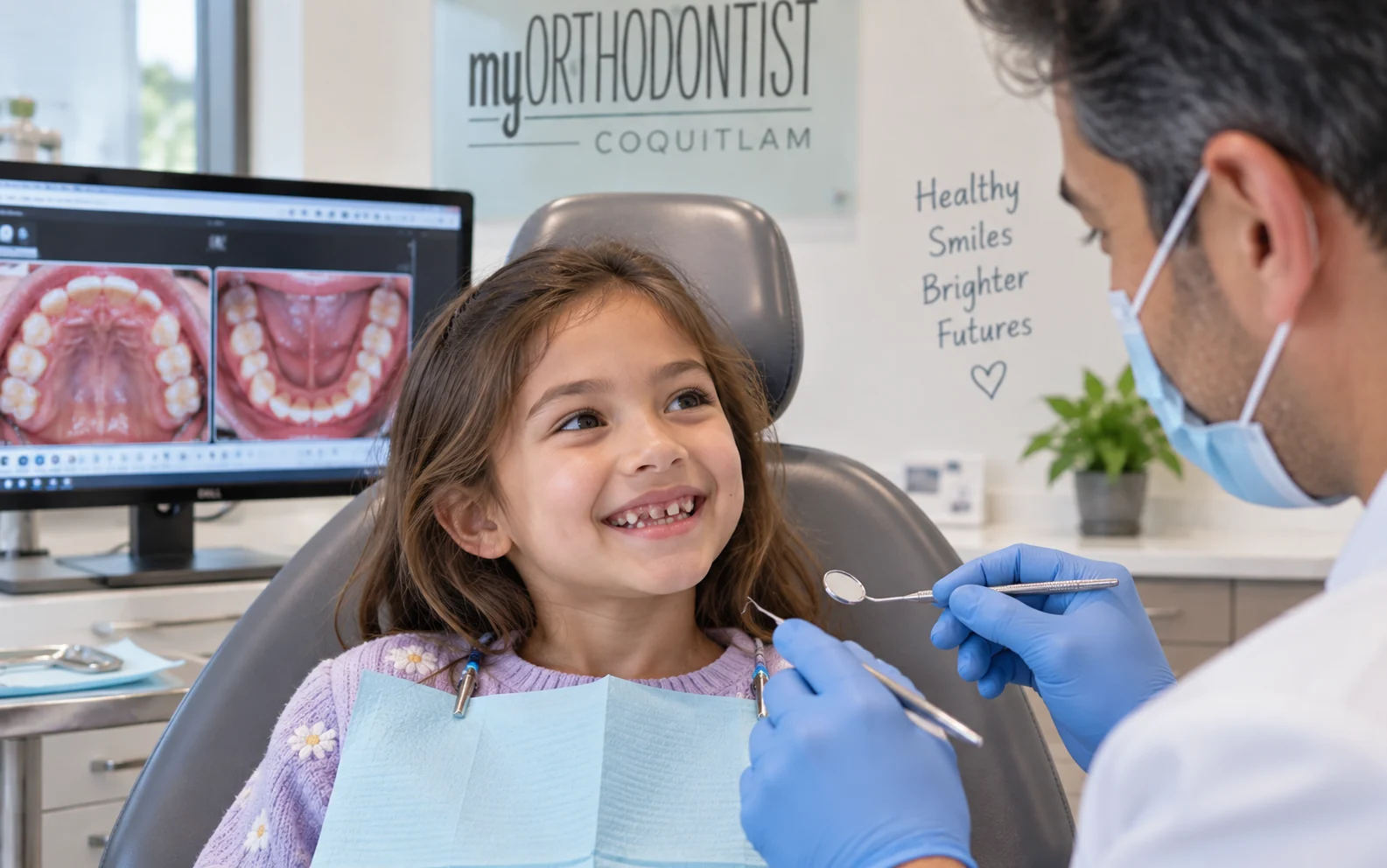
Permanent incisors and first molars are often present, allowing useful evaluation of eruption and bite development.
Crowding, crossbite, overjet, eruption path, missing teeth, habits and jaw relationships.
An assessment is not a commitment to braces or Phase I treatment.
When no treatment is indicated, periodic growth and eruption checks may be enough.
The aim is to identify problems that benefit from earlier attention while avoiding treatment that can safely wait.
When you are ready for an in-person assessment, care is available through myORTHODONTIST Coquitlam. The practice currently lists Dr. Aly Kanani and Dr. Alireza Haerian Ardekani among its orthodontists and offers braces and Invisalign for children, teens and adults.
No. An assessment may lead to treatment, observation or no intervention.
Observation can allow permanent teeth and jaw growth to progress until timing is more appropriate.
Assessment may include photographs, radiographs, scans or other records in addition to the examination.
These links provide professional, manufacturer or municipal context. They do not replace individualized clinical advice.
Last reviewed September 5, 2026. Educational content only. Treatment availability, provider schedules, fees and office policies can change; confirm current details directly with the clinical practice.